Senator Abdul, you are an American citizen who worked hard, persevered, and ultimately achieved success. Your loyalty to the United States of America comes first and foremost, and there is nothing wrong with that. I fully understand that some of your political speeches, particularly those associated with election campaigns, are designed to appeal to American national sentiment and emphasize that America is the country that gave you opportunities and contributed to your success.
However, when such speeches go beyond American geographical boundaries and extend into Egypt, its history, and its people, in ways that carry disrespect or diminish their dignity—whether intentionally or through misunderstanding—we have every right to disagree with you and every reason to respond.
I address you in my capacity as a former member of the Egyptian Senate during its First Legislative Term (2020–2025), and from the perspective of a statesman who understands that disagreement does not eliminate mutual respect, and that defending one’s homeland does not require insulting others.
First: Being a Taxi Driver Is an Honorable Profession
What particularly caught my attention were your remarks about your relatives in Egypt, describing them as taxi drivers in a manner that seemed to suggest that their profession was something embarrassing or beneath your status.
Let me be clear: driving a taxi is an honorable profession. We hold the highest respect and appreciation for everyone who earns an honest living through hard work. A person’s profession or socioeconomic status should never determine their worth or dignity.
And I have a straightforward question for you: Do we not have taxi drivers and ride-hailing service drivers in the United States as well?
If you genuinely care about your relatives and believe they deserve better opportunities, why not open doors for them in the United States, strengthen family ties, and help them improve their circumstances? Perhaps they could work in the same profession there, or perhaps they could find other opportunities suited to their abilities and ambitions.
Hard work deserves its reward, and a person’s value is determined neither by nationality nor by occupation, but by their humanity and their efforts.
I would also welcome Egyptian media outlets inviting your cousins and relatives for an interview, so that we can hear their memories of you in Egypt, the places you used to visit together during your holidays, and the moments you enjoyed eating mangoes, koshari, and falafel, as you have mentioned in your statements.
Perhaps this would help us discover the common human values that transcend differences in nationality and political position.
Here, I would like to recall the words of Almighty Allah:
“They ask, ‘Why has this man not been given wealth and status?’ Is it they who distribute the mercy of your Lord? It is We who distribute among them their livelihood in this worldly life, and raise some of them above others in rank, so that some may employ others in service. Yet the mercy of your Lord is better than whatever they accumulate.”
The Holy Quran, Surah Az-Zukhruf (43:32).
Second: Egyptian-American Relations Are More Than an Election Campaign Speech
I respond to you through clarification, evidence, and reason, because you are a public official in the United States, and you should understand that relations between Cairo and Washington are far too significant to be reduced to election rhetoric or domestic political messaging.
Egyptian-American relations have deep historical roots and are built upon mutual strategic interests. The Egyptian people respect the American people, and the reverse is also true. American institutions understand Egypt’s importance and its regional role.
As for the issue of American assistance, which you raised publicly, I view it primarily as part of a political narrative intended to demonstrate to American voters that your first and foremost priority is American national interest.
However, let us describe this relationship more accurately.
During my tenure in the Egyptian Senate, where I had the honor of representing the Egyptian people, I previously proposed reconsidering the terminology commonly used in public discourse. I advocated replacing the terms “aid” or “assistance” with a more accurate concept: “Strategic Partnership and Mutual Exchange.”
The relationship is, in essence, an exchange of interests and mutual benefits.
Egypt is not merely a country receiving assistance, just as the United States is not simply a country providing resources without receiving strategic returns. The relationship involves interconnected considerations, including regional security, stability, counterterrorism, international navigation, and economic and political interests.
Different American administrations have attempted to use certain aspects of this relationship as instruments of political pressure. Yet the strategic interests connecting nations do not begin or end with a particular administration or president.
Third: The Difference Between a Statesman and Someone Seeking the Spotlight
I take pride in the opportunities Egyptian youth have received to assume important positions and responsibilities during President Abdel Fattah El-Sisi’s tenure. Competence, preparation, and hard work have become important considerations in many pathways to leadership.
The Egyptian Parliament has witnessed young political figures entering public life at an early age. Among them was a young journalist who became a member of the House of Representatives and publicly declared under its dome that he did not like President El-Sisi, while the President himself was in office.
Disagreeing with a president is not the problem. Political disagreement is a legitimate right. The problem arises when parliamentary work turns into personal publicity, and when violating parliamentary rules and regulations becomes a means of attracting attention rather than using the legislative platform to serve citizens.
In contrast, Egypt has other examples of young people who have chosen the path of hard work, professional development, and achievement.
One such example is an Egyptian Air Force officer who pursued higher education, earned both a master’s degree and a doctorate, and eventually assumed leadership of one of Egypt’s prominent modern national institutions responsible for food security: the Future of Egypt Authority for Sustainable Development.
There are numerous other examples of young Egyptians in both the executive and legislative branches who have demonstrated that young people need more than an opportunity. They need proper preparation, responsibility, and the ability to deliver meaningful results.
Here lies the difference between someone who uses public office to achieve temporary media attention and someone who regards it as an enduring national responsibility.
Building statesmen is not simply about appointing young people to positions of authority; it is about preparing them to shoulder responsibility and shape the future.
Fourth: Egypt Is Not a Country That Can Be Brought Down by Passing Political Calculations
Senator Abdul, over the past eight decades, Egypt has endured wars, crises, and regional and international challenges that could have brought other countries to collapse. Yet Egypt has remained standing, preserving its geographical integrity, national identity, and institutions.
Egypt is not merely a set of borders drawn on a map. It is a nation with a profound historical and civilizational legacy, and a people whose awareness and cohesion have enabled them to overcome successive hardships.
Anyone contemplating an attempt to undermine Egypt’s territorial integrity or threaten the security of its people should study history carefully before making public statements.
Egyptian history is not simply the story of a nation struggling to survive. It is the history of a country that has contributed to shaping regional and international balances of power.
Fifth: Creative Chaos — When Political Slogans Turn into Geopolitical Disasters
I would remind you of an experience widely rejected by many Egyptians: what became known as the “Creative Chaos” project, associated with the vision of the late Orientalist Bernard Lewis, and whose regional manifestations and consequences unfolded during the administration of former U.S. President Barack Obama.
I will not go into the details of that project. Instead, I invite you to examine its consequences on the map of our region.
On June 30, 2013, the Egyptian people took to the streets, expressing their position on the political developments unfolding in their country and contributing to the rejection of a political course that a broad segment of Egyptians opposed.
If you wish to understand the consequences of the chaos that swept across our region, take a close look at today’s regional map.
Countries have been devastated, institutions have disintegrated, and entire populations have experienced waves of displacement and forced migration. Egypt has become a host to millions of people arriving from brotherly and friendly nations, treating them as honored guests rather than merely numbers in refugee records.
President Abdel Fattah El-Sisi has rejected reducing these communities to the label of refugees, emphasizing the distinctive approach adopted by the Egyptian state in dealing with them.
And this has taken place despite the economic challenges facing Egypt as a result of successive regional and international crises.
The truth that everyone must recognize is that chaos does not create a stable future. Just as violence breeds violence, chaos breeds further chaos. Slogans raised in the name of change can ultimately lead to the destruction of nations when they are not accompanied by a clear vision, strong institutions, and viable national alternatives.
Sixth: The Egyptian Armed Forces — A Reflection of the Egyptian People
I want to emphasize that the Egyptian Armed Forces are not an entity detached from society. They are a natural extension of it.
They come from every Egyptian household. Their ranks include sons of the Egyptian people from different religious and social backgrounds. Muslims and Christians stand side by side, united by their national identity, military doctrine, and sacred duty to defend their homeland.
There is no place for sectarianism in the doctrine of the Egyptian Armed Forces, and no soldier is distinguished from another on the basis of religion. The blood of Egyptians is one when it comes to defending their land.
That is why we are not merely a people who happen to have an army. We are a people who understand that protecting the homeland is a collective responsibility, and that the armed forces are an integral part of the national fabric.
Our doctrine is victory or martyrdom in defense of God and the soil of our homeland. This conviction is passed down from one generation to the next.
Seventh: Human Rights Must Be Evaluated Through Achievements, Not Political Slogans
If you wish to discuss human rights, I invite you to examine what Egypt has accomplished in improving people’s living conditions.
Consider the elimination of unsafe informal settlements and the provision of dignified housing, the expansion of social solidarity programs, and the strengthening of the right to a decent standard of living.
I also invite you to read Egypt’s National Human Rights Strategy, which is built around four principal pillars.
Furthermore, I encourage you to learn about the state’s efforts to replace traditional prisons with modern Correction and Rehabilitation Centers that take international human rights standards into consideration and focus on rehabilitating inmates and reintegrating them into society.
Human rights should not be reduced to political accusations or selective criticism. They require a comprehensive assessment of achievements, challenges, institutional reforms, and the actual impact on people’s lives.
Finally: Our Roots May Differ in Geography, but Humanity Should Unite Us
Senator Abdul, I acknowledge your success as an American senator and respect your political achievement.
From now until January 1, 2027, I invite you to read more deeply about your Egyptian roots and Egypt’s geopolitical history.
If your loyalty is to America’s interests, as it should be for an American public official, and your roots are Egyptian, then I can tell you that my loyalty, as someone who had the honor of representing the Egyptian people in the Senate, is to Egypt’s interests, and my roots are Egyptian.
I believe that we share common ground, above all, our humanity and our responsibility not to violate the rights of others.
That is one of the fundamental principles of human rights—yet, unfortunately, it is a principle that appears to be missing from some political discourse.
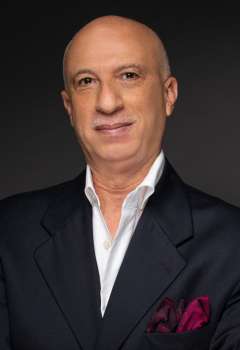
Dr. Mohamed Emara
Former Member of the Egyptian Senate
First Legislative Term (2020–2025)











 follow us in google news









Comments