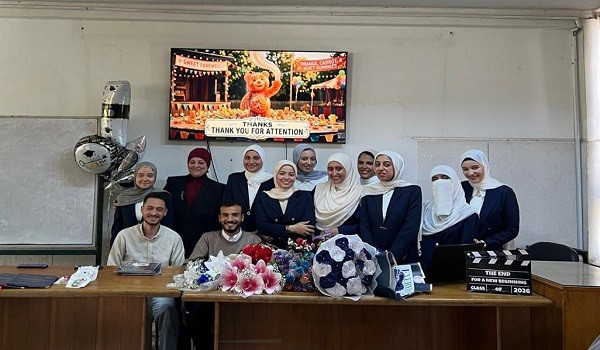
Several Arab and Gulf media platforms have highlighted an innovative graduation project developed by female students at the Faculty of Agriculture, Ain Shams University, which focuses on transforming whey — a dairy industry byproduct — into healthy candy for children using sustainable food technology and circular economy concepts.
The project attracted attention from regional news outlets and technology-focused media platforms for its combination of food innovation, environmental sustainability, and resource recycling. Reports emphasized the project’s potential to convert underutilized dairy waste into a commercially viable functional food product.
Among the media outlets that covered the story were Gulf-based technology and news platforms that focused on the project’s use of food technology to repurpose dairy byproducts into value-added nutritional products aligned with global sustainability trends.
Other Saudi and Gulf newspapers highlighted the project’s environmental and health dimensions, while also emphasizing its innovative application of sustainable food manufacturing and clean-label nutrition.
The graduation project was developed by students from the Quality Management Program at Ain Shams University’s Faculty of Agriculture. It aims to utilize whey, which is often discarded despite being rich in proteins, amino acids, vitamins, and minerals, by converting it into a healthy candy fortified with natural ingredients such as carrots and oranges.
Dr. Neama Said, the project’s lead supervisor, stated that the initiative represents a practical model for circular economy applications in the food industry by transforming a low-value byproduct into a high-value nutritional product while reducing environmental waste.
The students explained that the project also included studies related to food safety, hazard analysis, production feasibility, and commercial scalability, alongside a preliminary economic study that demonstrated promising market opportunities amid rising consumer demand for healthier food products for children.
The growing media attention surrounding the project reflects increasing regional interest in university-led innovations that combine sustainability, food technology, and practical economic applications, particularly in sectors linked to waste recycling and functional food production.


 follow us in google news









Comments