It is well known that mastering the art of translation requires several years of university study in order to properly command this responsible craft. I went through two amusing experiences during my military career that I will never forget.
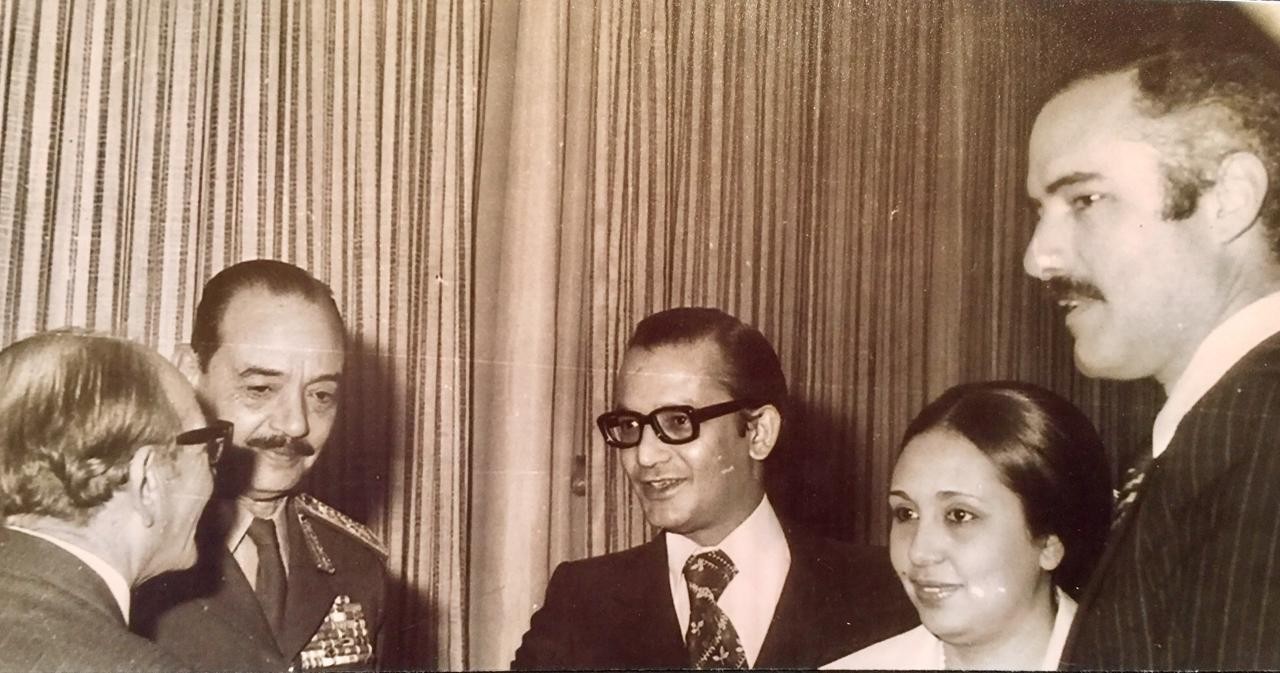
The first occurred because, owing to my background as the son of a British mother, I had full proficiency in the English language. This led to my transfer from the paratrooper forces to the Department of Moral Affairs at the end of 1974, when I held the rank of Major. At that time, large numbers of Ministers of Defense from around the world, military historians, and prominent media figures were arriving in Egypt. Their shared objective was to visit the Suez Canal front and witness firsthand the miracle of the Egyptian Army’s crossing of enormous barriers and obstacles that all military experts had deemed impossible to overcome.
This prompted Field Marshal Mohamed Abdel Ghani El-Gamasy, then Minister of War, to issue an order establishing an office composed of officers proficient in foreign languages and diplomatic conduct, tasked with receiving these delegations and organizing high-level visit programs that would honor Egypt. I was among the officers selected for this mission.
One day, while I was sitting at my desk writing a report on a delegation from the Royal Military Academy Sandhurst, which had departed the previous day, I received an order from the Minister of War to proceed immediately to the Military Technical College, where I would receive instructions for a mission that required execution. Naturally, I moved at once. Upon arrival, the military police directed me to the college theater hall, where I saw a group of commando officers seated on the stage, led by their commander, Major General Nabil Shoukry. In front of them stood a large number of Egyptian and foreign correspondents with their cameras, whose intermittent flashes illuminated the faces of the commando forces and their equipment.
Amid all this, the commander of the commando forces stood up and called out: “Qaisouni, come up here and translate the press conference.” The request struck me like a shock, yet in a state of astonishment, I obeyed the order—only to realize that I would be narrating in English the details of a bold operation carried out on August 23, 1976, in which an attempted hijacking of a civilian aircraft full of foreign passengers from Luxor Airport by three armed terrorists had been foiled.
The conference began, and during the translation, I forgot several words and expressions. This forced me to resort to sign language—for example, when describing how one officer used a screwdriver to strike a terrorist beside him, I turned to the foreign correspondents and rotated my index finger in a circular motion, helping them grasp the meaning. I was drenched in sweat, fearing that I might make mistakes, but, thank God, the mission was accomplished successfully.
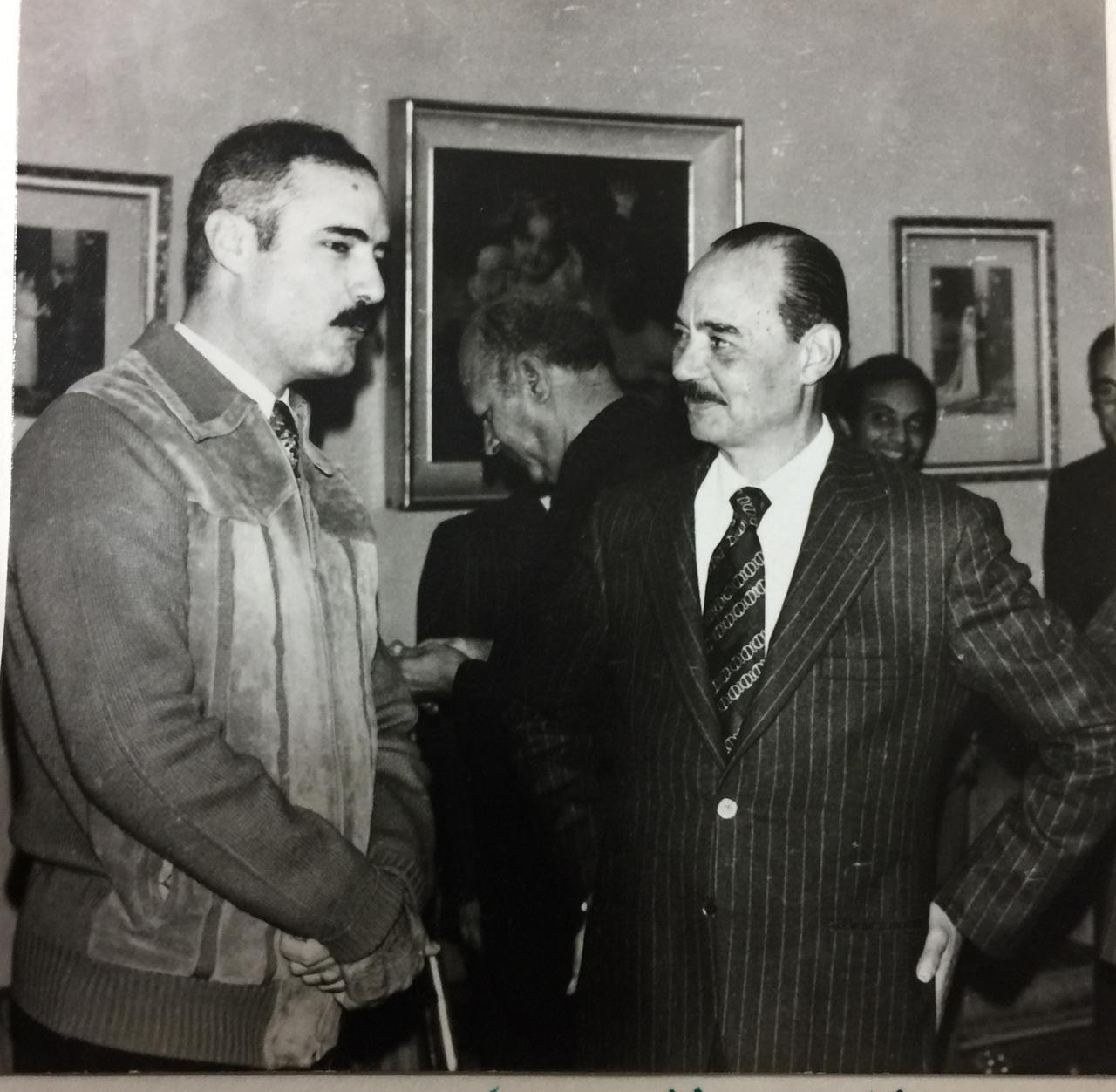
The second experience—more difficult than the first—occurred at the end of a visit by a Pakistani delegation headed by Field Marshal Muhammad Zia-ul-Haq, then Pakistan’s Minister of Defense. The Pakistani Embassy hosted a grand dinner at the Sheraton Cairo, attended by a distinguished gathering of ambassadors from the Egyptian Ministry of Foreign Affairs, media figures, foreign diplomats, and senior Egyptian Armed Forces leaders. I was responsible for the full supervision of the visit program and attended the event accompanied by my wife.
At the conclusion of the dinner, Field Marshal Zia-ul-Haq delivered a speech expressing praise and gratitude for the hospitality and warm reception they had received throughout their visit. He then turned to Field Marshal Mohamed Abdel Ghani El-Gamasy and requested that he deliver a speech. The Field Marshal stood up and, in his deep, resonant voice, called out: “Major Qaisouni.” I was seated at a table at the back of the hall, so I immediately stood up and hurried to stand beside him to receive his instructions. He looked at me and, in a powerful voice heard by all attendees, ordered me to translate his speech.
I leaned toward him and said quietly that I was not proficient in simultaneous interpretation. His response was firm: “This is an order.” I then whispered, asking him to slow down his speech so that I could translate as best as possible. He began speaking slowly, and I translated. But soon, he grew enthusiastic and accelerated his pace, and naturally, I could not keep up. It was impossible for me to stop translating when he paused, especially since most of the audience understood both Arabic and English.
The hall soon erupted in laughter. My wife nearly disappeared beneath the table from embarrassment. The Field Marshal turned to me and, in his booming voice heard by all, asked: “What you are saying now—is it a translation of my speech or a speech of your own?” At that moment, Field Marshal Zia-ul-Haq began pounding the table in front of him, laughing loudly, with tears streaming from his eyes, as he understood Arabic and had heard El-Gamasy’s words.
Amid all this, I replied, “Your Excellency, you spoke too quickly,” my face flushed with embarrassment. The hall then broke into applause when the Field Marshal ordered me to return to my seat. I walked back through the tables with my head lowered, while the applause and laughter continued unabated. After everyone had left the hall, El-Gamasy looked at my wife with a smile and said, “It’s alright—I surprised your husband.”
Former Advisor to the Minister of Tourism and the Minister of Environment for Ecotourism Affairs







 follow us in google news








Comments