In medicine, we learn early that when a human being stands between life and death, many of the things that divide the world outside the operating room simply disappear. Nationality, language, borders and political differences no longer matter. A patient enters the operating theatre with only one identity: a human being who needs someone to save their life. Perhaps that is why I have always felt that I understand Sheikh Zayed’s philosophy of humanitarianism more profoundly from inside an operating room than from books or speeches.
The late Sheikh Zayed bin Sultan Al Nahyan, may his soul rest in peace, did not regard humanitarian assistance as an additional act undertaken by the state when circumstances allowed. He saw it as part of the very meaning and responsibility of the state itself. In his vision, a successful nation is not simply one capable of building for itself, but one that possesses the strength and confidence to extend a hand to others. Perhaps one of the greatest ideas Sheikh Zayed left to the UAE was that true strength is measured not only by what a nation possesses, but also by what it is able to give.
This principle has been deeply rooted in the Emirati experience from the very beginning. Humanitarian action was never conceived as a seasonal activity, a temporary response to crises, or an initiative whose value could be measured by the number of statements or images accompanying it. It was an expression of an ethical vision: that a person should be helped simply because they are human; that suffering does not require a passport to deserve our attention; and that humanitarian duty should never end at the boundaries of geography, language, religion or politics.
I have experienced this philosophy personally. Every time I participated in a humanitarian medical mission, and every time I stood before a heart patient who could not afford the cost of treatment, I understood that what we were doing was far greater than performing an operation. We carried with us an idea: that a human life should never be held hostage to the place of one’s birth or to one’s financial means. And we witnessed first-hand how a medical decision, a heart operation, or a team arriving from thousands of kilometres away could restore hope to an entire family.
I have had the honour of performing thousands of operations on heart patients in need in different parts of the world through initiatives associated with the name of the late Sheikh Zayed bin Sultan Al Nahyan. For us, Sheikh Zayed’s name was never merely a name attached to a humanitarian initiative. It represented a comprehensive philosophy of how we should view the human being: a philosophy that tells us that the true value of knowledge, wealth or an institution is not measured by what it keeps for itself, but by the difference it is able to make in the lives of others.
This is where the distinction lies between an act of charity and a humanitarian approach. Charity may end once an immediate need has been met. A humanitarian approach, however, evolves into institutions, policies, hospitals, schools, humanitarian air bridges, medical teams, development programmes and generations raised to understand that standing beside another human being is not an exception, but a natural responsibility of both state and society. Genuine humanitarian action does not begin only when a crisis occurs. It begins beforehand by building the capacity to confront crises, and it continues afterwards by empowering people to stand on their own feet again.
Sheikh Zayed’s true legacy cannot be measured solely by the number of projects that carried his name, nor by the scale of assistance the UAE provided during his lifetime, important as those achievements were. His deeper legacy lies in the fact that a generation that never lived during his time still acts according to the same principles. To me, this is the clearest indication that a value has evolved from the conviction of an individual into the culture of a nation.
Under the leadership of His Highness Sheikh Mohamed bin Zayed Al Nahyan, President of the United Arab Emirates, this approach has continued and expanded, becoming increasingly institutionalised and closely connected to development, sustainability and capacity-building. The question is no longer simply whether we can reach the scene of a crisis. We must also ask: How can our impact remain after the crisis is over? How can we build healthcare capacity? How can we transfer knowledge? How can we equip people with skills? How can we help communities regain the tools and capabilities they need to move forward?
This transformation is particularly important because the world today needs more than emergency relief, essential though it remains. It also needs humanitarian action that is deeper and more sustainable. When disaster strikes, food, medicine and emergency assistance must arrive quickly. But once the immediate emergency has passed, the more difficult question begins: what comes next? How do we rebuild a hospital? How do we train doctors? How do we ensure that education continues? How do we provide water? How do we enable a family to regain its independence rather than remain dependent on assistance? This is the point at which humanitarian action moves from relief to empowerment.
In healthcare in particular, I know very well the difference between saving a patient and building a system capable of saving patients. A single operation may give one person a new life, but training a young surgeon may give hundreds of patients the same opportunity. Transferring an advanced medical technology may transform the quality of care across an entire hospital. Establishing a specialised medical unit may reshape the future of an entire city or region. This is why I believe the most meaningful form of humanitarian medicine combines treatment, education and capacity-building.
Treating a patient today is a great achievement; training a doctor who will save patients tomorrow creates an even deeper impact. Helping to build an institution that will continue serving people for years represents sustainable humanitarian action in its highest form.
And this, in my view, is one of the most beautiful aspects of the Emirati experience: giving did not remain an initiative; it became an enduring approach. It did not remain a memory associated with the Founding Father; it became part of the identity of the nation. Putting people first was not merely a phrase in Sheikh Zayed’s philosophy — it was a way of building a country.
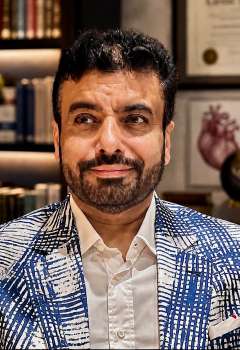
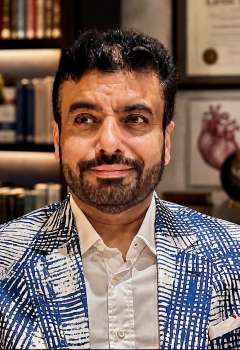
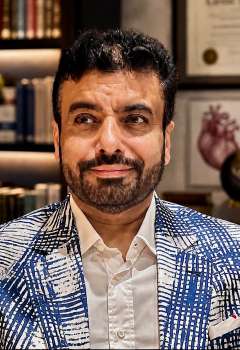
Professor Abdallah Raweh
Internationally renowned cardiac surgeon; Honorary President of the University of Salerno, Italy; Vice President of the University of Lugano, Switzerland; Professor of Cardiac Surgery at the Catholic University of Rome; and Professor of Cardiac Surgery in London, United Kingdom.







 follow us in google news



Comments