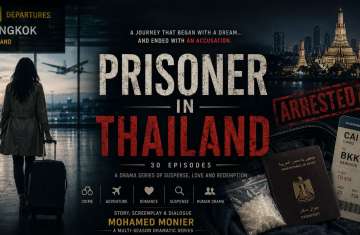
Mohamed Monier Completes Writing of “Prisoner in Thailand” Ahead of Production and Casting Phase
Screenwriter, Author, and Media Professional Mohamed Monier has completed the writing of his new television drama series, “Prisoner in Thailand,” a 30-episode dramatic project developed as the first installment of a
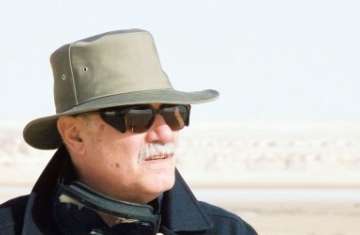
I was assigned to travel as a military adviser to the Libyan Special Forces in Benghazi and Tripoli, to train them in everything related to parachute jumping, heavy drops, and unarmed combat techniques, as well as to translate all publications related to imported military equipment, devices, and gear from English into Arabic, and to supervise
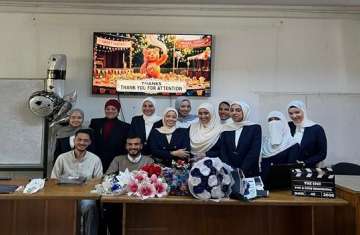
Several Arab and Gulf media platforms have highlighted an innovative graduation project developed by female students at the Faculty of Agriculture, Ain Shams University, which focuses on transforming whey — a dairy industry byproduct — into healthy candy for children using sustainable food technology and circular economy
In the summer of 1971, The New York Times published a set of secret documents spanning forty-seven volumes, which Americans came to call the Pentagon Papers. These documents revealed that the government which had sent its sons into the Vietnamese jungles was not merely managing a war, but also managing a narrative about that war—and
At the end of the Second World War in 1945, following the surrender of Germany and Japan, we were living in a ground-floor apartment on Hammouda Street, just a few meters from the southwestern outer wall of Abdeen Palace. This was due to the lack of available accommodation in my grandfather’s building at 24 Mostafa Kamel Street in