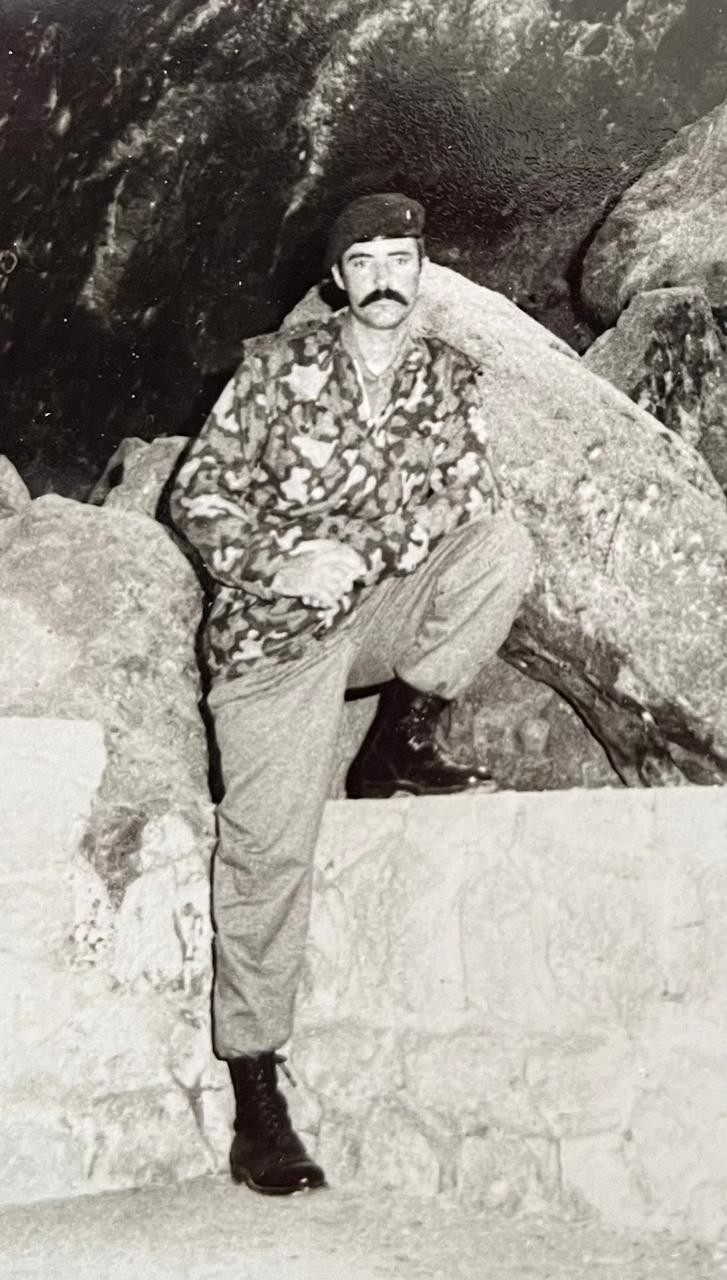
I was assigned to travel as a military adviser to the Libyan Special Forces in Benghazi and Tripoli, to train them in everything related to parachute jumping, heavy drops, and unarmed combat techniques, as well as to translate all publications related to imported military equipment, devices, and gear from English into Arabic, and to supervise the construction and installation of ground training facilities for parachute jumping, including towers, descent-speed reduction fans, swings, and tiered platforms.
The first trip was a short reconnaissance mission from July 9, 1971, to July 16, 1971. The second lasted from December 1971 until March 1973. I had been expected to remain there for around three years, but circumstances arose that led to my return home—praise be to God—so that I could be with my colleagues and soldiers and take part in the glorious October 1973 Ramadan War.
I begin with some general information, events, and important moments that I experienced and will never forget. I begin with a brief account of the history and geography of Libya, Egypt’s neighboring country on our western border.
Libya’s most famous national symbol and hero is Omar Al-Mukhtar, may God have mercy on him, known as the Lion of the Desert. He was the hero and leader of the resistance against the brutal Italian occupation. After fierce battles in which the occupying forces suffered heavy losses, he was captured and executed on September 16, 1931.
Libya’s area is 1,775,500 square kilometers, approximately twice the size of Egypt. It has a coastline extending 1,820 kilometers along the Mediterranean Sea. Its southern borders are with Sudan, Chad, and Niger, while its western borders are with Tunisia and Algeria. At the time of my stay there, the population was 3,506,700, and its capital was Tripoli.
It is worth noting that in 1923, the Egyptian adventurer Ahmed Pasha Hassanein, accompanied by a caravan of 38 men, 27 camels, a horse, and a dog, crossed it during the longest desert journey undertaken by a human being in history: eight months and 3,500 kilometers on foot, by camel, and on horseback. During that journey, he stayed at the oases of Jalu and Kufra in Libya, and discovered the oasis and mountain of Arkenu on April 23, 1923, and the oasis and mountain of Al-Uweinat on April 30, 1923. Al-Uweinat is a granite mountain about two kilometers high, with a circular summit roughly twenty-five kilometers in diameter, divided between Egypt, Libya, and Sudan. These oases and mountains had been completely unknown to the world and were not marked on maps.
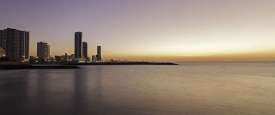
In the far southwest of Libya lies the magnificent Jebel Acacus, rich with prehistoric human drawings. The nature of Libya is extremely beautiful. Its coasts are pristine, and its sands are almost covered with seashells of different shapes, sizes, and splendid colors. Whenever circumstances allowed, I would go alone to the seashore and spend enjoyable hours in complete solitude amid nature of remarkable beauty.
At other times, I would wander in the desert adjacent to the military unit where I was stationed, where I met an elderly shepherd of gentle character. He taught me how he dealt with the nature of that desert. For example, there was a plant resembling an artichoke, dense with leaves, with a green stem about thirty centimeters long, topped by a round fruit the size of a ping-pong ball. The entire plant was covered with hard, sharp thorns. Using his stick, the shepherd would separate the fruit, gather several of them, then light a fire with wood he had collected during his wandering. He would throw the fruits into the fire and wait several minutes until the sharp thorns surrounding them burned and softened. He would then gather them, peel them easily, and eat the heart of the fruit. Naturally, I followed all these steps and ate these fruits, which had a mild and pleasant taste resembling cucumber.
After I arrived in Benghazi, entered the accommodation and training camp, and received the pre-equipped villa that served as my residence, I toured the camp to familiarize myself with its facilities, equipment, officers’ dining hall, and training hangar. I noticed that a large mosque was being built inside the camp. I also noticed a large depression in the camp ground, away from the buildings and parade area. In the middle of the depression were stairs whose materials clearly indicated that they led to something important.
Naturally, I descended about two hundred meters deep into the earth. After around one hundred meters—halfway down—I noticed an electrical control room. Beyond that point, there was complete and intense darkness. I turned on the electrical switches, illuminating the deeper hundred meters and also activating the air-conditioning and ventilation systems below. I continued descending until I found before me a flat passage with a low ceiling that forced me to bend down, like the ascending passage leading to the burial chamber of Khufu, Pharaoh of Egypt, inside the Great Pyramid.
After about fifty meters, I saw a scene of astonishing beauty: a still freshwater lake, extraordinarily pure and transparent, with its bottom clearly visible. It was about the size of a football field, with a ceiling roughly twenty meters high. On the opposite side were three openings leading to caves, one of which clearly appeared to be the source of the water. I was standing before a lake deep underground—glory be to God.
During the months of my stay, I visited this beautiful lake dozens of times. I later learned that Italian engineers had built the stairs, the passage, the platform overlooking the lake, and had installed the lighting, air-conditioning, and ventilation systems. I also learned that adventurers had tried several times to discover the source of the lake’s water but failed. The last attempt had taken place two years earlier, by a Frenchman and an Italian, equipped with gear and a Zodiac boat. They entered one of the caves and never returned. It was clear that these caves were branching and contained strong water currents. I also learned that the lake was internationally registered as one of the significant and mysterious natural phenomena.
From time to time, I would visit the Egyptian Consul, Mr. Salah Abdeen, and the Commercial Attaché, Mr. Sayed Tag El-Din, at their offices.
One day, around midday, I was delivering a lecture to a group of officers and soldiers in the open air inside the camp, when I noticed two black Mercedes cars entering the camp and stopping near where I was standing. To my surprise, my father stepped out of the first car, accompanied by the Egyptian Consul in Benghazi, Mr. Salah Abdeen. He waved to me. I asked a fellow Egyptian officer to complete the lecture, then ran to where my father was standing. After greeting him, he asked me to get into the car with him, while the consul took the second car. We left the camp and headed to the hotel where he was staying, the Bernichi Hotel.
It was three o’clock in the afternoon. Once we entered the suite and were alone, I asked him the logical question: what was the reason for his presence in Libya? His answer was that he had been sent by President Sadat to meet President Gaddafi or his deputy, Major Abdessalam Jalloud, because they urgently needed sincere economic advice that would place national income on the right path in the interest of the state.
My father then told me that he was in great need of a hot meal so he could take his heart medication. I hurried to the hotel kitchen staff, all of whom were Egyptian. I entered the kitchen, met the head chef, introduced myself, and asked him to prepare a meal for my father. With clear warmth, he did what was needed and personally delivered the food to my father’s suite.
While my father was eating, he told me the details of his arrival at Benina Airport in Benghazi. He had been sent by the President of the Republic at Gaddafi’s request; he was a former Deputy Prime Minister for many years and carried a diplomatic passport. When the aircraft arrived and passengers began to disembark, including my father, he heard someone at the foot of the aircraft stairs calling: “EL-KAISSOUNI… EL-KAISSOUNI.” My father approached the man and introduced himself. The man replied, “I am the driver who will take you to the hotel,” and began moving toward the exit. But another person approached my father with great courtesy, introduced himself as Salah Abdeen, the Egyptian Consul in Benghazi, and said he had come to receive him. My father then went with him after thanking the driver, who informed him that the instructions required him to remain inside the hotel until Gaddafi’s office contacted him.
My father asked to pass by the camp where I was staying before going to the hotel. After that, three days passed while he remained confined to the hotel without anyone contacting him. I visited him twice a day. He told me he had even been deprived of his daily walking exercise and asked for a way to contact President Sadat from an unmonitored telephone.
I contacted the Military Attaché, Lieutenant Colonel Kamal El-Barawy, and informed him of my father’s request. He immediately sent a car that took us from the hotel to his office. He received my father, led him into his office, placed the telephone before him after establishing contact with President Sadat’s office, and then left us so the call could take place in complete secrecy.
About fifteen minutes later, my father came out, thanked the Military Attaché, and told us that President Sadat would immediately contact Gaddafi to arrange the desired meeting that same evening. We returned to the hotel to find a driver sent by Major Abdessalam Jalloud, Gaddafi’s deputy, who took my father to meet Jalloud at his office.
My father later informed me that the meeting lasted three and a half hours with Jalloud and figures from the ministry and the banks. He then asked me to book him on the first aircraft heading to Cairo, even if it was that same evening. I managed to reserve a seat on the aircraft departing the following evening. The Egyptian Consul invited us to lunch at his residence before departure, together with Ashraf Marwan, which we attended. I then saw my father off as he left Benghazi, and I felt relieved when the plane took off, knowing that this mission had been exhausting for him.
I must mention that the letters exchanged with my dear wife always lifted my morale. God knows how happy I was to receive her letters. Every evening, I would write to her describing my observations, tourist information about Libya, its climate and nature, and I would draw the plants I saw in the surrounding desert, as well as photograph some of the natural scenery.
The presence of my sister Nahed, her husband, and their first child also helped raise my spirits. So did the Egyptian Consul in Benghazi, Ambassador Salah Abdeen, and Mr. Sayed Tag El-Din, the Commercial Attaché, who, after returning to Egypt, held the position of Deputy Director of the Legal Department at the Arab International Bank.
There was also the elderly shepherd who passed with his sheep near the edge of the camp overlooking the desert. I formed a friendship with this gentle man. I also developed a strong friendship with an Azharite sheikh named Abdel Muttalib Salah, preacher at Al-Hussein Mosque, who had been seconded to Libya to take responsibility for preaching at the largest mosque in Benghazi. Naturally, I also formed bonds with the members of the mission—my colleagues among the officers and soldiers.
The mosque was completed about two months before Ramadan 1972. One of my soldiers from the Egyptian mission gave the call to Friday prayer, and we all went to the mosque. An hour passed, and we discovered that there was no imam to ascend the pulpit and deliver the Friday sermon. My shepherd friend stood up and said loudly: “Are you not ashamed that all of you are educated, and yet none of you has stepped forward to deliver the Friday sermon and lead the prayer? God is sufficient for us, and He is the best disposer of affairs.” He then turned toward the qibla and prayed four rak‘ahs, and unfortunately we all did the same. This affected me deeply.
I later learned that the sheikh who would take over leading prayers and delivering Friday sermons, coming from Al-Azhar Al-Sharif, would arrive after Ramadan. I therefore decided to assume this responsibility. I bought a book on the pillars and conditions of the Friday sermon, as well as Dr. Heikal’s book, The Life of Muhammad, peace and blessings be upon him. Every evening, I studied this task. I also wrote the Friday sermon, which concerned the childhood of the Prophet, peace and blessings be upon him. I had decided to divide the story of the Prophet’s life into around fourteen sermons.
The following Thursday, I went to the large mosque in central Benghazi, where I met Sheikh Abdel Muttalib Salah. I asked him to help me by listening to my first sermon, correcting my pronunciation, and guiding me on the proper method of delivering a Friday sermon. After two hours, I left the mosque and returned to the camp.
The next day, Friday, the worshippers gathered. I ascended the pulpit and delivered the Friday sermon. I stated that I would narrate the life of our noble Prophet, peace and blessings be upon him, rich with lessons, over the coming two months, including Ramadan, until the awaited Azharite sheikh assumed the task.
In the following Fridays, I noticed that the worshippers began bringing their children to listen to the details of the life of our noble Prophet, peace and blessings be upon him, and the numbers continued to increase. I remember that during the final sermon, which concerned the passing of our noble Prophet to the mercy of God Almighty, I could not control myself before everyone and burst into tears, facing great difficulty in completing the sermon.
I had the honor of meeting Lieutenant General Saad El-Shazly, Chief of Staff of the Egyptian Armed Forces and the second man in the Ministry of War, who planned the October War with extraordinary brilliance—may God have mercy on him—during his visit to the Libyan Special Forces School in early 1973. I had first met him in the summer of 1961 in Marsa Matrouh.
I left Libya at dawn on a military aircraft at the end of March 1973. After several hours, I was in Cairo. The following day, I was presented to Lieutenant General Saad El-Shazly, Chief of Staff of the Armed Forces, who affirmed his confidence in me and asked me to return to the Egyptian Paratrooper School to resume my specialization as a parachute instructor and unarmed combat instructor.







 follow us in google news






Comments