By: WPM Correspondent
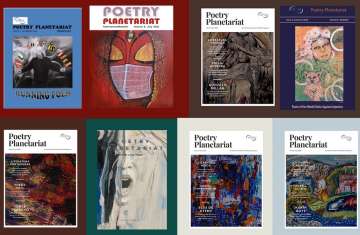
Poetry Planetariat is the official publication of the World Poetry Movement (WPM) dedicated to promoting humanitarian values, peace, justice, and concern for the planet Earth through poetry and art. Poetry Planetariat invites creative pens and brushes to submit their poems, criticisms of poetry, poetry book reviews,
A person spends most of their life captivated by beauty. Whether it be in people, material possessions, or natural scenes and tourism. Seeking beauty, venerating it is genetically coded into the human psyche. Focusing on the social aspect, we’ll talk about beauty in people.
We are all aware of the existence of an objective
The Egyptian artist Amir Wahib is an almost unique character with a special world in drawing, design and ideas. His journey in and outside Egypt - and what is between them – is glorious. I went to meet him in his studio to be my guest for a short interview, but the session was interesting and he talked about everything. Egypt and the
Nothing is as it was... My cup of coffee is no longer the source of happiness that I would wait for from night to morning to revel in the meaning of peace and tranquility. Its aroma no longer has the joy that once tickled my senses with love and passion...
It no longer has that magical effect, capable of always awakening me, despite that
Despite the English occupation of Egypt lasting about seventy-five years (three-quarters of a century), French culture was the most influential in the aristocratic class in Egypt. Most of its members went to France to obtain their higher degrees from there. For example, we saw literary figures and visual artists like Taha Hussein, Mohamed