Greek education’s main priority today is internationalization
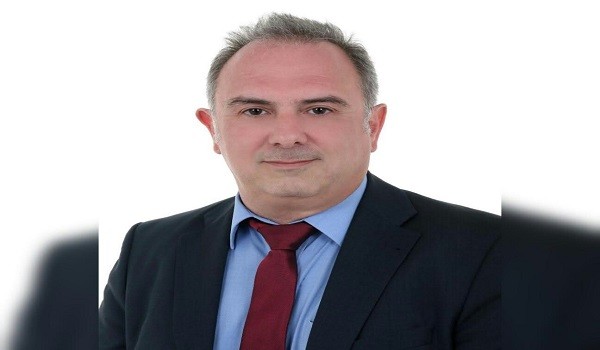
Dr. Christos Michalakelis, professor at Harokopio University of Athens, Department of Informatics and Telematics, speaks about the historic relationship between Greece and Egypt, the upcoming initiatives to enhance the education ties, as well as Greek education priorities.
Professor Dr. Christos Michalakelis, is the President of Study in Greece, the National Agency for the Internationalization of Greek Universities, Director of MSc Applied Informatics and Board of Administration of Harokopio University.
How would you describe the state of higher education in Greece today, including its priorities, future direction and challenges?
Greek higher education is going through what I would call its most important transformation in decades. The backbone of the system is a nationwide network of public universities, in Athens, Thessaloniki and every region of the country, from Crete to Thrace. They are research-intensive institutions whose graduates and academics work in leading universities, hospitals and companies all over the world.
The main priority today is internationalisation. Until recently the Greek public university taught almost exclusively in Greek. Recent legislation changed that. Greek universities can now offer full undergraduate programs in foreign languages, and for the 2026–2027 academic year there are already 16 English-taught bachelor’s programs and more than 200 English-taught master’s programs. They range from Medicine, Pharmacy and Law to Artificial Intelligence and Data Science, Business, Economics, Archaeology and the Humanities and continue expanding. Greece has also opened its higher education landscape to branches of reputable foreign universities, and significant investment, including from the EU Recovery and Resilience Facility, is going into infrastructure, joint international programs and digital transformation.
Of course there are challenges. Like much of Europe, Greece faces a demographic decline, and our universities need to attract talent from abroad in order to stay vibrant. We also have to keep improving student services, housing and administrative procedures so that they meet international standards. We see these challenges as opportunities. For Greek students they bring a more international classroom and stronger links with universities abroad. International students get a European, internationally recognised degree, taught by excellent faculty.
What inspired you to bring Greek universities to Cairo, and what do you hope this initiative will achieve?
Egypt is a natural partner for Greece, and Cairo is one of the great academic capitals of the Arab world and of Africa. Egypt has one of the largest and youngest student populations in the region, and Egyptian families place enormous value on education. At the same time, Greek universities are opening up to the world as never before. Bringing the two together was an obvious step.
Study in Greece works in close cooperation with the Hellenic Ministry of Foreign Affairs and our diplomatic missions abroad. This mission is a good example of that cooperation. Together with a delegation of Greek universities, we will take part in the international education fair in Cairo, and we will also hold an event at the residence of the Ambassador of Greece. I would like to warmly thank the Greek Ambassador to Egypt Nikolaos Papageorgiou and the Greek Embassy in Egypt for their support.
Greek Universities Panorama in Cairo, which will take place on 14 November, is co-organized by the Embassy of Greece in Egypt, and Study in Greece (SiG), Greece’s organization for the internationalization, global promotion and cooperation of Greek universities. The event aims to strengthen and promote academic ties between Egypt and Greece and to present Egyptian students the wide range of study opportunities offered by Greek universities and explore collaboration opportunities with academics from Egypt.
We hope to achieve three things. First, we want Egyptian students and their families to meet Greek universities in person, and to discover that they can study Medicine, Engineering, Business, Computer Science or the Humanities in English. Second, we want to connect Greek and Egyptian universities, so that Rectors, Deans, Professors and Faculty can turn good intentions into concrete agreements. Third, we want to show that Greece is a reliable, welcoming partner and a gateway to Europe for Egyptian talent.
How would you describe the historical ties between Greece and Egypt, and how do they shape educational cooperation today?
Few countries in the world share as long and as deep a relationship as Greece and Egypt. Ancient Greek thinkers such as Herodotus, and according to tradition Thales, Pythagoras and Plato, travelled to Egypt to learn from its civilisation. Alexander the Great founded Alexandria, and the Library and the Mouseion of Alexandria became the greatest center of learning of the ancient world. Euclid, Eratosthenes and many others worked there. In a sense, Alexandria was the first “international university” in history, and it was a joint Greek–Egyptian achievement.
In modern times, the Greek community of Egypt, in Alexandria, Cairo and beyond, made a remarkable contribution to the country’s economic and cultural life. It gave the world figures such as the poet Constantine Cavafy, along with the Greek Orthodox Patriarchate of Alexandria and Greek schools and institutions in Egypt.
Egyptian universities, such as Alexandria University, are discussing dual and joint degrees with Greek universities and are even planning a presence in Greece. Greek universities are working on establishing an academic presence in Alexandria. History gives us trust. Education allows us to turn that trust into a shared future for our young people.
What are the current and new agreements and partnerships, such as joint degrees, exchange, or research projects, do you see developing between Greece and Egypt in the coming years?
There is already a solid basis. Many Greek and Egyptian universities have signed memoranda of understanding, and there are exchanges of students and academic staff, including through the Erasmus+ International Credit Mobility scheme, which funds mobility between European and partner-country universities. Discussions on dual and joint degrees are under way, for example between Alexandria University and Greek institutions. Both sides have also shown interest in establishing a physical academic presence in each other’s country.
In the coming years I see the greatest potential in four areas including: Joint and double degrees, especially at master’s level, so that a student can study in both Cairo and Greece and receive a degree recognised in both countries and in the European Union, Joint research in fields that matter to both our countries and the whole Eastern Mediterranean.
Summer schools and short programs, which are an excellent first step for students and institutions to get to know each other as well as Joint participation in EU programs such as Horizon Europe, where Greek universities can act as natural partners for Egyptian institutions.
The visit to Cairo is designed precisely to open new doors between rectors, deans and researchers. We will follow up on every contact made.
How do Greek universities support international students in adapting to life and studies in Greece, and what facilities and benefits are available to them?
Greek universities have invested considerably in international student support. Many organize orientation days, buddy and mentoring programs run by Greek students, and Greek language and culture courses, which help international students feel at home and also improve their job prospects.
Students have access to university libraries, laboratories, sports facilities, counselling and career services, as well as a very active student life.
International students can also take part in European mobility programs such as Erasmus+, and research-oriented students can join research projects and laboratories. The growing community of international students, together with the large Arab and Egyptian community already living in Greece, creates a supportive environment.
Study in Greece, in turn, works with universities and the authorities to keep making procedures simpler and services better, because we know that a good student experience is the best ambassador for any country.
What makes Greece an attractive destination for international students both academically and culturally?
Academically, Greece offers internationally recognised European degrees, compatible with the Bologna Process, from universities with strong research records and faculty who have often studied and taught at leading universities abroad. Greek universities are particularly strong in Medicine and the Health Sciences, Engineering and Computer Science, Shipping and Maritime Studies, Business and Economics, Tourism, Agriculture and Food Science, and of course Classics, Archaeology and Philosophy.
Culturally, Greece is a safe, warm and hospitable country with a Mediterranean way of life that Egyptian students will find very familiar: the importance of family, food, the sea and the sun. It is the birthplace of democracy, philosophy, theater and the Olympic Games, and studying here means living among monuments that are part of the heritage of all humanity. It is also a gateway to the rest of Europe.
What is your advice to young students in general and specially in the era of Artificial Intelligence and modern technologies?
My first piece of advice is: do not fear Artificial Intelligence, learn to master it. AI will change almost every profession, from medicine and engineering to law, business and the arts. The students who will succeed are those who understand these tools, use them critically and responsibly, and combine them with their own judgement and creativity.
Second, invest in what machines cannot replace: critical thinking, ethics, the ability to ask the right questions, communication and empathy. It is no coincidence that these are exactly the values of Greek philosophy. Socrates taught that wisdom begins with questioning. In a world full of instant answers, the ability to question is more valuable than ever.
Third, never stop learning. The degree you earn is not the end of your education but the beginning. Be curious, learn languages, and combine disciplines, technology with the humanities and science with entrepreneurship.
Fourth, open yourself to the world. Studying abroad, even for one semester, is one of the most transformative experiences in a young person’s life. You learn about other cultures, and above all about yourself. And finally, I would tell young Egyptians that Greece has always been a place where people come to learn and to exchange ideas. Our doors are open, and we look forward to welcoming you.
 Lana Nusseibeh: From Diplomatic Presence to International Leadership




 follow us in google news


Comments