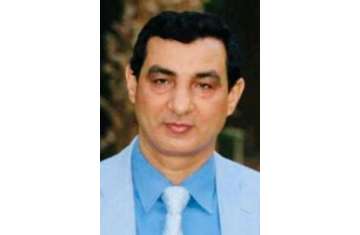
More than eighty years after the founding of the United Nations, and following the tenure of nine Secretaries-General, not a single woman has reached the highest position in an organisation that has made gender equality one of its fundamental principles. On 31 October 2026, as the world marked the twenty-sixth anniversary of United Nations Security Council Resolution 1325 on Women, Peace and Security, Emirati diplomat Lana Zaki Nusseibeh had already entered a historic race to lead the United Nations, following her nomination by the United Arab Emirates on 21 October. This coincidence was not merely a matter of timing, but an opportunity to revisit a question that goes beyond women's representation in leadership positions to the future of the international organisation itself: Could the change the United Nations has been awaiting come from an Arab diplomat who knows its institutions from within, has participated in shaping its decisions, and now aspires to lead it during one of the most complex periods in the history of the international order?
This nomination carries significance beyond competition for a senior international position. It reflects the UAE's growing presence in multilateral affairs and opens a discussion about the prospects of an Arab figure assuming leadership of the international organisation, particularly at a time when the United Nations faces increasing challenges concerning the effectiveness of its institutions, its ability to respond to international crises, and the restoration of confidence in its role.
Nusseibeh's nomination is supported by a professional career spanning more than two decades in government and diplomacy, during which she established a prominent presence within the United Nations. She served as the UAE's Permanent Representative to the organisation from 2013 to 2024, becoming the first woman to hold this position. During these years, she was involved in matters relating to international peace and security, humanitarian action, sustainable development, and the reform of multilateral institutions. She also served as Vice-President of the General Assembly and President of the Executive Board of UN Women.
During the UAE's non-permanent membership of the Security Council for the 2022–2023 term, she led the Emirati delegation and twice held the Council's presidency. She played a role in several important issues and resolutions, including Resolution 2720, adopted in December 2023, concerning the strengthening of mechanisms for delivering humanitarian assistance to the Gaza Strip. Nusseibeh currently holds the position of Minister of State at the UAE Ministry of Foreign Affairs and has announced that she has taken leave from her ministerial duties to devote herself to her candidacy, reaffirming her commitment to the independence of the position she seeks to assume.
This experience has given her direct knowledge of how the United Nations operates, the nature of negotiations within the Security Council, and the relationship between Member States and the Secretariat. These are essential elements for understanding the political and institutional responsibilities required of the Secretary-General. This experience acquires additional significance in light of the independent nature of the position and the ability it requires to build trust and bring Member States' perspectives closer together, a principle to which Nusseibeh reaffirmed her commitment in her vision document for leading the organisation.
In her vision document for the leadership of the United Nations, Nusseibeh presents an approach focused on restoring the organisation's effectiveness and strengthening its ability to achieve tangible results, rather than merely issuing statements and announcing commitments. She places preventive diplomacy at the forefront of her priorities through early action to contain disagreements before they develop into conflicts, and through efforts to build practical understandings even in circumstances where comprehensive political settlements are difficult to achieve.
Among the most prominent ideas she proposes is the concept of "First Agreements", which involves beginning with actionable steps, such as securing humanitarian corridors, exchanging prisoners, and reaching local ceasefires, before building upon them to achieve broader and more sustainable agreements. Her vision also includes reforming the performance of UN institutions, reducing duplication in their work, improving spending efficiency, strengthening accountability, and addressing technology, artificial intelligence, employment opportunities for young people, and sustainable development.
Nusseibeh's approach is based on the understanding that the strength of the Secretary-General does not lie in possessing executive authority over states, but rather in the independence of the office and the ability to build trust and bridge differences. This is where the significance of her proposed approach becomes apparent, although its success remains dependent on the organisation's ability to turn limited understandings into sustainable outcomes, and on cooperation between the United Nations and Member States to secure the political will necessary for their implementation.
Nusseibeh's nomination does not come in isolation from the evolution of the UAE's role in international institutions. Rather, it represents a continuation of a diplomatic presence that has expanded in recent years, whether through membership of the Security Council or participation in humanitarian affairs, sustainable development, climate change, and the reform of the United Nations system, as well as initiatives concerning the protection of the rights of women and girls and strengthening their participation in peacebuilding.
In this context, the UAE's commitment to the Women, Peace and Security agenda has become particularly evident. In March 2021, Her Highness Sheikha Fatima bint Mubarak launched the first national action plan to implement Resolution 1325 among the countries of the Gulf Cooperation Council, covering the period 2021–2024. This reflected an Emirati commitment to integrating women's issues into peace and security policies and strengthening their participation in decision-making. Nusseibeh's nomination can therefore be viewed as a continuation of this diplomatic and institutional path, representing a transition from participating in the formulation of international initiatives to competing for leadership of the institutions responsible for implementing them.
The Emirati nomination received Gulf and Arab support. On 22 October 2026, the Gulf Cooperation Council countries unanimously announced their support for Nusseibeh's candidacy. Egypt also announced its support for the nomination on 26 October, coinciding with a telephone conversation between Egyptian Foreign Minister Dr Badr Abdelatty and His Highness Sheikh Abdullah bin Zayed Al Nahyan, Deputy Prime Minister and Minister of Foreign Affairs of the UAE. During the conversation, Abdelatty praised Nusseibeh's experience and capabilities in multilateral diplomacy and expressed Egypt's appreciation for her nomination.
This support acquires additional significance in light of the history of Arab representation in the leadership of the United Nations. Egyptian diplomat Boutros Boutros-Ghali previously served as Secretary-General from 1992 to 1996, remaining the only Arab to have held the position. Therefore, Nusseibeh's appointment would not only represent a historic first, as she would become the first woman to lead the organisation, but would also mark the return of Arab representation to its highest office, this time through an Emirati diplomat.
Lana Nusseibeh's nomination represents an important milestone in the UAE's growing presence within international institutions and reflects an ambition that extends beyond traditional diplomatic participation towards contributing to the leadership of the multilateral system. Gulf and Egyptian support also highlights the importance of Arab coordination in international affairs, particularly when it comes to positions whose significance extends beyond the borders of the nominating countries to the future of the region and its place within the international order.
The fundamental question now concerns the ability of Arab diplomacy to move from influencing international affairs to participating in the leadership of the institutions that manage them, and the role that Arab expertise can play in improving the performance of the United Nations and strengthening its ability to confront the challenges of the coming period. Perhaps the most important question remains: Does the United Nations need different leadership, or does it need an international political will that gives its leadership the ability to make a difference?
 Healthspan Action Coalition and Leading Italian Organizations Announce Global Collaboration



 follow us in google news
Comments